Who Is Rachel Cunliffe? Full Biography, Career Journey, Media Presence & Political Impact

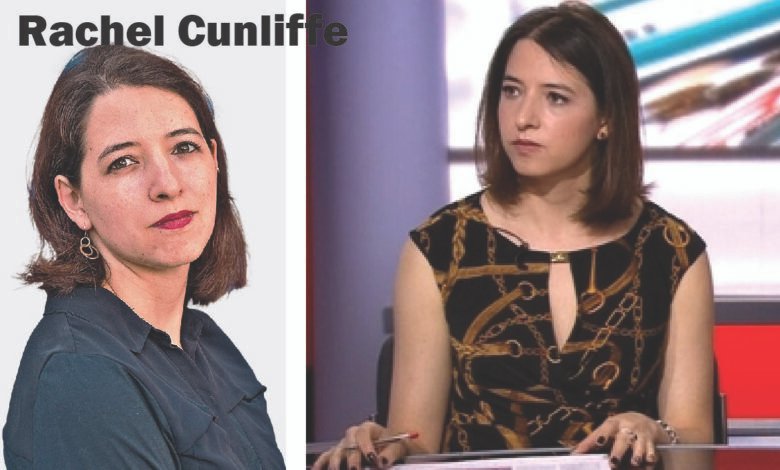
Who Is Rachel Cunliffe?
Rachel Cunliffe is widely recognised as one of the most thoughtful and articulate political journalists in the United Kingdom today. She has built her reputation through her work at the New Statesman, where she has served in senior editorial roles, including Deputy Online Editor and later Associate Political Editor. Her commentary style is known for being clear, balanced, intellectually rigorous, and accessible, drawing on her classical education to offer context-rich political analysis. This gives her work a distinctive flavour—she often connects ancient ideas with modern political challenges in a way few journalists do.
Beyond print and digital journalism, Cunliffe is a regular presence across major British media platforms, appearing on BBC News, Sky News, and Times Radio. She is respected for her calm, articulate debating style and her ability to explain complex political issues to a wide audience. Her influence continues to grow, and she is increasingly regarded as one of the key voices shaping political understanding in the UK.
Early Life and Background
While specific details about her birthplace and family background are not publicly disclosed, it is known that Rachel Cunliffe grew up in the UK in an environment that valued education, intellectual curiosity, and critical thinking. From a young age, she showed a strong interest in academics, particularly in languages, literature, and history. These early interests laid the foundation for her distinctive analytical approach as a journalist.
Her school years appear to have nurtured her love for classical studies, debate, and writing—early indicators of the skills she would later bring into political journalism. Although she keeps her personal life private, it is clear that her upbringing played a significant role in shaping her thoughtful and scholarly worldview.
Education and Classical Scholarship
Rachel Cunliffe’s academic background is one of the most unique aspects of her professional identity.
She studied Classics at the prestigious Trinity Hall, Cambridge, graduating with a first-class degree. Her studies included ancient languages, philosophy, political theory, and classical literature—subjects that continue to inform her modern political commentary. She later completed an MPhil in Latin Literature, deepening her understanding of rhetorical structures, ancient political thought, and historical narratives. This academic training gives her analysis an unusual richness, as she often draws subtle parallels between ancient and modern governance, leadership, and societal behaviour.
A notable chapter of her early career is her period teaching Ancient Greek in South Korea, a rare and fascinating experience. This international teaching role broadened her global perspective, strengthened her communication skills, and demonstrated her dedication to education. Her classical grounding is now a signature part of her journalistic identity, setting her apart from many of her contemporaries.
Career Beginnings in Political Journalism
Rachel entered journalism at a moment when the British media industry was shifting rapidly toward digital platforms and new commentary spaces. Her early motivation appears to have come from a desire to combine academic rigour with accessible political communication. She first made her mark as Deputy Editor of Reaction, a startup focused on political and cultural analysis. In this role, she helped shape the platform’s editorial voice and developed her own style of thoughtful, nuanced commentary.
Her early editorial work helped her build essential skills, including:
-
Digital political analysis
-
Opinion writing
-
Editorial decision-making
-
Managing contributors and content strategy
This first stage of her career positioned her well for larger editorial responsibilities in mainstream British media.
Rise Through the British Media Landscape
Rachel Cunliffe’s professional ascent has been fast and impressive.
She moved from Reaction to become Comment and Features Editor at City A.M., where she covered politics, economics, and business culture. Her ability to explain complex political and economic issues made her a trusted voice for London’s professional readership.
In 2021, she joined the New Statesman, one of the UK’s most influential political magazines. There, she rose quickly:
-
Deputy Online Editor
-
Associate Political Editor
Her reporting style evolved from commentary to a broader blend of analysis, news interpretation, and multimedia communication. Her work at the New Statesman significantly increased her national visibility and established her as a leading political analyst.
Role and Work at the New Statesman
At the New Statesman, Rachel Cunliffe contributes across multiple platforms—digital, print, video, and podcasts. She covers some of the most important and difficult areas of UK political life, including:
-
Brexit and its long-term political consequences
-
Internal dynamics of the Conservative Party
-
Parliamentary behaviour and constitutional debates
-
Generational politics, especially the worldview of Millennials and Gen Z
-
Economic pressures on households and society
Her writing combines clarity with depth, often beginning with an accessible observation before moving into sharp, well-supported analysis.
She also appears frequently on New Statesman podcasts, where she discusses weekly political developments with a clear, composed, and often witty style. Her ability to connect with younger audiences has helped the publication strengthen its digital reach.
Broadcasting Career and Media Appearances
Rachel Cunliffe is a familiar face and voice across major British broadcasting platforms. She frequently appears on:
-
BBC News
-
Sky News
-
Times Radio
Her style as a broadcast communicator is:
-
Calm
-
Clear
-
Evidence-based
-
Non-partisan
-
Highly articulate
She is skilled at moderating or participating in debates without escalating tension—something particularly valued in the increasingly polarised world of political commentary.
Television audiences appreciate her clarity and her ability to summarise complicated developments in a few concise sentences. Her credibility continues to strengthen as her public profile grows.
Writing Themes, Analytical Style, and Signature Topics
Rachel’s work is defined by its blend of intellectual depth and accessibility.
Key features of her writing:
-
Storytelling approach: She often opens with an anecdote to draw readers in.
-
Classical parallels: Her classical background allows her to identify historical patterns in contemporary politics.
-
Generational analysis: She frequently explores the attitudes of Millennials and Gen Z, helping readers understand how younger groups shape political futures.
-
Cultural and social insight: She writes about shifts in public opinion, identity, education, and economic pressures.
-
Political clarity: She explains complex issues—like budget policies, leadership crises, or electoral trends—in simple terms.
Her writing also appears in major outlets, including:
-
The Times
-
The Telegraph
-
The Spectator
-
Prospect
These contributions further reinforce her standing as a versatile and respected analyst.
Selected Published Works and Notable Articles
Rachel Cunliffe has written a wide range of influential articles. Some of her most notable recurring themes include:
-
The role of generational politics in shaping electoral outcomes
-
The behaviour and future of the Conservative Party
-
The emotional landscape of younger generations
-
Cultural shifts in British society
-
Political upheavals in the UK and US
Her verified articles in publications like the Australian Financial Review and shots Magazine demonstrate her international relevance.
Age and Public Profile
Rachel Cunliffe is believed to be in her early to mid-30s, based on her academic and professional timeline. She has not publicly confirmed her age, which reflects her preference for maintaining some personal privacy. Despite her young age, she is widely viewed as one of the most authoritative and insightful voices in British political journalism. Her youth provides her with a perspective that resonates particularly with younger audiences who sometimes feel underrepresented in political discourse.
Family, Personal Life, and Privacy
Rachel keeps information about her family, relationships, and personal life private, a common choice among journalists who deal with public politics.
What is known is derived only from her professional appearances and occasional personal references, where she demonstrates:
-
A dedication to scholarship
-
A passion for learning
-
A balanced approach to public communication
Her privacy allows her to maintain a clear boundary between her professional expertise and her personal identity.
Net Worth and Professional Earnings Estimate
Rachel Cunliffe’s exact net worth is not publicly disclosed. However, based on her ongoing roles, freelance writing, media appearances, and speaking engagements, her estimated net worth is $500,000 to $1 million.
Factors contributing to this estimate include:
-
Senior roles at the New Statesman
-
Frequent appearances on major UK broadcasters
-
Paid speaking engagements through Specialist Speakers
-
Freelance commissions for high-profile publications
-
Consulting or panel contributions
Her career trajectory suggests her earnings and influence will likely continue to grow.
Media Influence, Public Impact, and Reputation
Rachel Cunliffe is respected for her:
-
Balanced and thoughtful analysis
-
Ability to explain complex issues clearly
-
Non-partisan and fair commentary
-
Engagement with younger audiences
-
Use of classical knowledge to bring historical depth to modern politics
Her influence is felt in:
-
Public debates on political reform
-
Media discussions on generational politics
-
Broader discussions about the communication of political ideas
Experts, policymakers, journalists, and academics often reference her work, showing her broad impact on political understanding in the UK.
Awards, Recognition, and Industry Standing
While she has not widely publicised awards, Rachel Cunliffe is frequently recognised through:
-
Invitations to speak at major events
-
Appearances on national news networks
-
Inclusion in political panels and debates
-
Contributions to respected publications
Her standing continues to rise as she becomes an increasingly prominent media figure.
Why Rachel Cunliffe Stands Out in British Journalism
Several qualities distinguish her from many other political commentators:
-
Classical Depth: Her academic background allows her to analyse politics from a long historical perspective.
-
Cross-Media Versatility: She excels in print, digital journalism, TV, radio, and podcasting.
-
Non-Partisan Insight: She is known for balanced, fair, and thoughtful commentary.
-
Accessible Clarity: Her writing is easy to follow yet intellectually rich.
-
Youthful Perspective: She brings modern insight into discussions often dominated by older commentators.
These qualities make her one of the most compelling voices in political journalism today.
Future Prospects and Career Trajectory
Looking ahead, Rachel Cunliffe appears poised for continued influence. Possible future directions include:
-
Moving into senior editorial leadership at major publications
-
Writing books on politics, generational change, or classical themes
-
Expanding her broadcasting presence
-
Launching digital political or cultural media ventures
-
Academic partnerships, guest lecturing, or university teaching
Her versatility means she could succeed in multiple areas of public communication.
Public Speaking and Events
Rachel Cunliffe is represented by Specialist Speakers, where she is a popular choice for events and discussions.
She regularly speaks on:
-
UK political upheaval
-
The future of US democracy
-
Migration and economic policy
-
The relevance of ancient Greek and Latin to modern politics
Her speaking engagements are valued in:
-
Corporate settings
-
Universities
-
Policy institutes
-
Media events
Her ability to communicate clearly to diverse audiences makes her a strong public speaker.
Conclusion
Rachel Cunliffe stands out as one of the most intellectually grounded, articulate, and influential political journalists in the UK today. Her combination of classical education and modern political insight allows her to examine issues from a fresh and unique perspective. Through her work at the New Statesman, her broadcasting presence, and her contributions to major publications, she continues to shape political understanding for audiences across generations. As British politics evolves, her voice is likely to remain central—and increasingly influential—in public debate.
FAQs
1. What is Rachel Cunliffe’s role at the New Statesman?
Rachel Cunliffe serves as Associate Political Editor at the New Statesman, where she writes political analysis, contributes to podcasts, and appears in video discussions on UK political developments.
2. What makes Rachel Cunliffe’s journalism unique?
Her work blends classical scholarship with modern political insight. She often draws connections between ancient political ideas and current events, offering a richer perspective than traditional commentary.
3. What subjects does Rachel Cunliffe speak about at events?
Through Specialist Speakers, she gives talks on UK political upheaval, US democracy, migration policy, generational politics, and the role of classical languages like Latin and Greek in political communication.
4. How did Rachel Cunliffe start her journalism career?
She began as Deputy Editor at Reaction, a digital platform for political analysis. This early role helped her build editorial experience and a strong voice in political commentary.
5. Has Rachel Cunliffe written for other major publications?
Yes. In addition to her New Statesman work, she has written for The Times, The Telegraph, The Spectator, and Prospect, covering politics, culture, society, and generational change.
For More Double Magazine